Trusted in clinics — wholesale accounts for PT, chiro & athletic training

Clinical resources

Clinical applications guide

Mobility Tape doesn't behave like rigid strapping or a compression garment: it stretches along its length, lifts the skin slightly off the tissue beneath it, and stays put for up to seven days. This guide sets out how clinicians use it — how much tension to apply, which direction to lay a strip for a given presentation, how long to leave it on, and when not to use it.

Close-up of Mobility Tape applied along a patient's calf

What you're treating with

Three properties drive every clinical application. Elasticity along the length lets the tape follow tissue as it lengthens and contracts, so range of motion is preserved where a brace would limit it. The slight lift the tape creates between skin and the tissue below is what allows lymph and interstitial fluid to move more freely, which is why oedema and bruising clear faster under a correctly applied strip. And the adhesive itself carries menthol and borneol, so the strip keeps delivering a cooling, soothing signal between visits — patients commonly report feeling it for up to 30 hours after application.

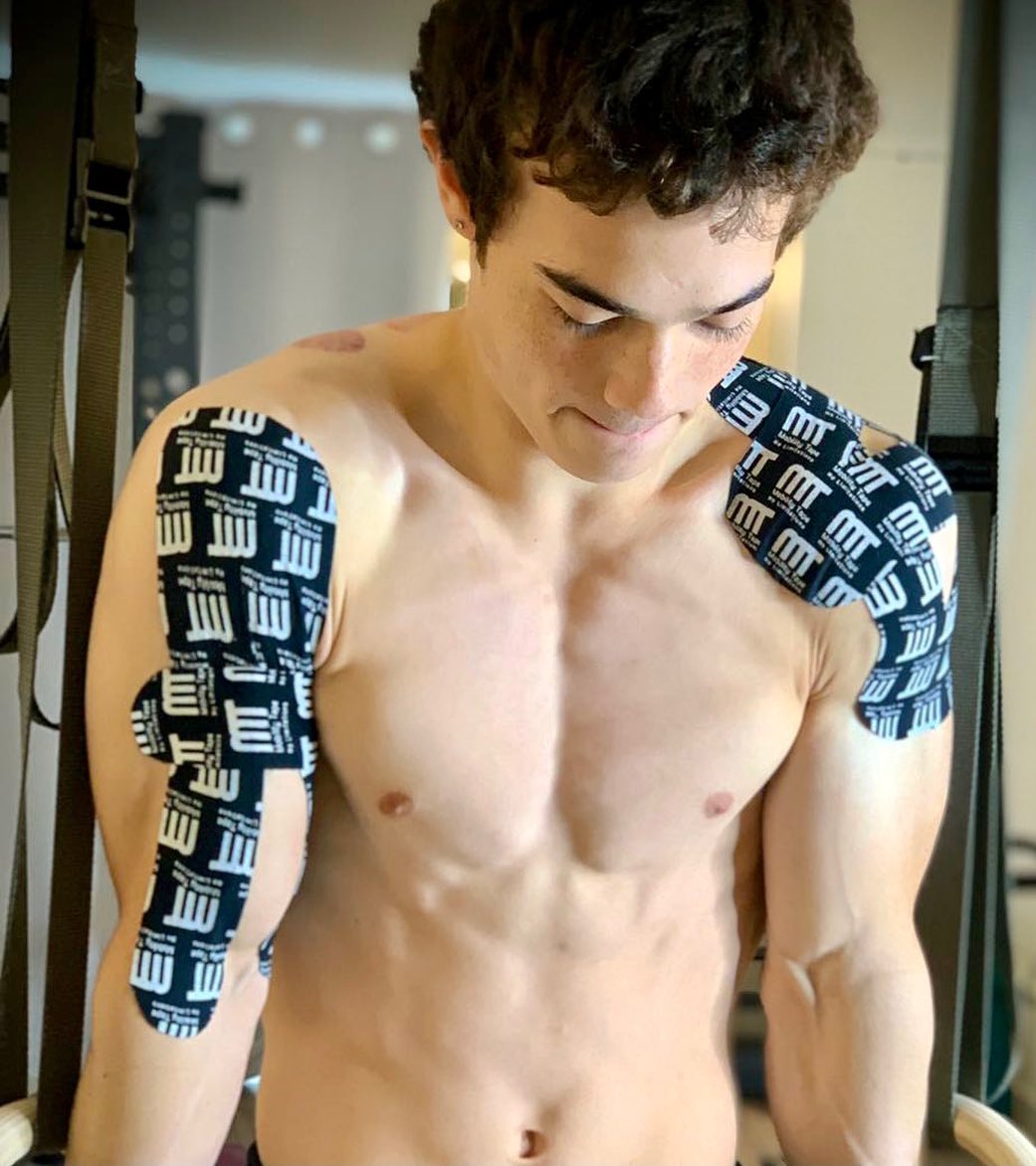
The fabric gives in more than one direction, so it follows the way muscle actually deforms, and the hypoallergenic adhesive holds through sweat, showers and hands-on treatment. The PRO Series can be applied under compression to support rapid recovery, or as a decompression strip to relieve pain and swelling while assisting lymphatic drainage.

  • Drug-free, topical and non-invasive — certified by Health Canada.
  • Waterproof and hypoallergenic, so a strip applied in clinic is still in place at the next visit.
  • A 16 ft (5 m) roll yields roughly 30–40 clinic applications, depending on strip length.

Assess and prepare

Tape goes on last, after your hands-on work, with the skin clean and the treatment area settled. Decide the goal — decompress, support or cue — before you cut anything.

  • Assess first: swelling, active range, pain with movement, and the tissue you actually want to influence. Tape is an adjunct to treatment, not a replacement for assessment.
  • Clean and dry the area. Oils, lotions, liniment and sunscreen stop the adhesive bonding — wipe the skin and let it dry fully.
  • Clip hair rather than shaving it. A close shave leaves micro-abrasions that itch under the tape.
  • Patch test new patients, especially anyone with a history of adhesive or menthol sensitivity: apply a short strip and review at the next visit.
  • Round the corners of every strip before it goes on — it is the single best defence against peeling edges.

Tension reference

Tension is always applied through the middle of the strip. Keep the first and last 3–5 cm unloaded so the ends lie quietly against the skin and stay down for the full wear time.

TensionHow it looksTypical clinical use
0% (paper-off)Backing peeled away with no stretch in the fabricAnchors and ends, lymphatic fan strips, sensitive or fragile skin
15–25%Fabric just begins to stretch; edges stay relaxedDecompression over painful or swollen tissue, light fascial work
25–50%Visibly stretched, roughly half of full elongationMuscle facilitation or inhibition, proprioceptive cueing, tendon support
50–75%Strong stretch, close to the tape's limitMechanical joint correction at the knee, ankle or shoulder — mid-strip only

Application protocols

  • Oedema, post-injury swelling and bruising — Fan four to six strips from the congested area toward the nearest lymph node group, each laid at 0–15% tension with no stretch at either end. Leave 2–3 days, reassess, reapply.
  • Acute and chronic pain — A single decompression strip over the region at 15–25%, applied along the direction of the tissue rather than across it. Expect up to 5–7 days of wear; the menthol keeps working between sessions.
  • Muscle facilitation and inhibition — To encourage a weak or inhibited muscle, lay the strip origin to insertion at 25–35%. To calm an overactive one, reverse the direction — insertion to origin — at the same tension.
  • Joint stability — Knee, ankle and shoulder corrections use a 50–75% mid-strip with unloaded ends, placed to hold the joint in the position you want it to find. Add a second, low-tension strip for comfort where needed.
  • Post-surgical and scar management — Once the surgeon has cleared the area and the wound is fully closed, use light 0–15% strips placed around rather than over the scar to support fluid movement and reduce pulling.

Wear time, reassessment and removal

  • A single application holds for up to 7 days. In acute care, plan to reassess and reapply every 2–3 days.
  • Rub the tape firmly once it's down — friction activates the adhesive. Ask the patient to avoid heavy sweating or showering for about 20 minutes.
  • Waterproof means showers, swimming and sweating are all fine once the bond has set.
  • Remove by peeling back along the direction of hair growth, ideally after a warm shower or with an adhesive remover, supporting the skin with your free hand as you go.
  • Chart what you applied, at what tension, and how the patient responded — it's the fastest way to build your own protocol library.

Precautions and contraindications

  • Do not apply over open wounds, unhealed incisions, drains, or infected or broken skin.
  • Avoid in patients with a known allergy to menthol, borneol or acrylic adhesives; patch test when in doubt.
  • Use caution on fragile, thin or irradiated skin, and in patients on anticoagulant therapy — remove slowly and check the skin at each visit.
  • Stop and remove immediately if the patient reports itching, burning or a rash.
  • Mobility Tape is an adjunct to care and is not a substitute for assessment, diagnosis or treatment.

Stocking the clinic

  • A 16 ft (5 m) roll yields roughly 30–40 applications, depending on strip length and the region treated.
  • Clinics running fan strips for oedema use the most tape — keep a case of heat-infused rolls for treatment rooms and a PRO Series roll for corrections.
  • Restock before you run out: clinic accounts order by the case on net terms.

Put it into practice

Open a professional account for tiered pricing and clinic support, or start with a heat-infused roll and tape your next patient.